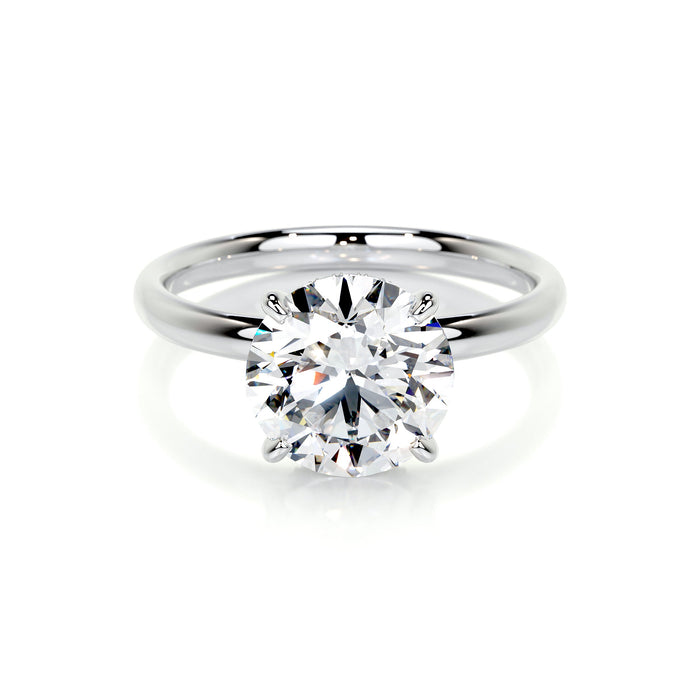

A diamond can have excellent clarity and an uncertain history. Its appearance tells you little about who mined it, who traded it or where the money went. For someone buying an engagement ring, that creates a question a grading report alone cannot answer.
Blood diamonds are diamonds associated with financing armed conflict. The formal Kimberley Process definition is narrower: rough diamonds used by rebel groups or their allies to fund armed action against legitimate governments. That distinction matters because buyers may expect the term “conflict-free” to cover every labour, human-rights and environmental concern.
The term describes a history, not a type of stone
Blood diamonds have no distinctive colour, shape or inclusion pattern that identifies their connection to violence. “Blood” refers to the human consequences of their trade.
The issue is historically associated with conflicts in countries including Sierra Leone, Angola and Liberia. However, a country’s past does not establish the history of every diamond it produces today. The Kimberley Process itself describes changes in countries previously affected by diamond-funded conflict.
For buyers investigating what are blood diamonds while comparing mined and lab-grown jewellery, the practical question is what evidence supports the origin of the particular stone being offered.
Avoid treating “African diamond” as a synonym for conflict diamond. Equally, a familiar retail address or an expensive setting does not establish responsible sourcing. Ask about the supplier’s records and the specific assurances attached to your purchase.
What the Kimberley Process actually covers
The Kimberley Process Certification Scheme began operating in 2003. It controls international trade in rough diamonds through participating countries, with certification requirements intended to keep conflict diamonds out of legitimate supply chains.
Its scope creates an important distinction at the jewellery counter. A Kimberley Process certificate concerns rough-diamond trade; it is not a grading certificate issued for every polished stone in a finished ring. The scheme also does not certify individual jewellers.
If a salesperson describes a ring as “Kimberley certified”, ask what documentation they mean and how it relates to that ring.
Because the scheme’s definition centres on rebel-financed conflict, compliance alone should not be interpreted as a comprehensive assessment of wages, working conditions or environmental impact. Those concerns require additional evidence. Ask the retailer to separate its conflict-diamond assurances from any broader responsible-sourcing claims.
Read the paperwork for the question it answers
“Certified diamond” can sound lab made diamonds without explaining what has actually been checked. Before comparing documents, identify what you want to establish: the stone’s characteristics, its geographic origin or the supplier’s sourcing practices.
| Evidence | What to examine | What to avoid assuming |
|---|---|---|
| Diamond grading report | Identification, measurements and quality information | That grading proves responsible sourcing |
| Origin or traceability documentation | Named origin and the method linking records to the stone | That every report includes mine-level traceability |
| Retailer’s sourcing policy | Requirements for suppliers and how concerns are investigated | That a policy proves compliance for every item |
| Purchase documentation | Stone description and any written sourcing assurances | That verbal promises will appear automatically |
Some services specifically address geographic origin. GIA’s Diamond Origin Report, for example, requires the diamond to have undergone its rough-analysis service before polishing. It then uses matching procedures to connect the polished stone with the recorded rough diamond. This service cannot simply be added to any previously graded diamond without that earlier analysis.
That makes timing useful: request traceability information before selecting the stone. If documented origin is essential to you, establish that requirement at the start of the search.
Lab-grown diamonds change the sourcing questions
Laboratory-grown diamonds offer an option for buyers who want a diamond created through manufacturing rather than extracted as a mined gemstone. They have essentially the same chemical composition, crystal structure and optical and physical properties as natural diamonds. Specialist testing can distinguish their growth origins.
However, laboratory origin does not independently verify working conditions, electricity sources or the environmental impact of production.
Ask where the diamond was grown and what supports any environmental claim. If the seller describes it as carbon neutral, request the claim’s scope, supporting assessment and whether it relies on offsets. A manufacturing location and a measurable claim are more useful than an unexplained green label.
Apply the same care when assessing jewellery from novitadiamonds.co.uk or any other retailer. Distinguish what the business documents from what you might infer from the words “lab-grown”.
Check the whole ring before paying a deposit
The centre diamond may receive most of the attention, but a halo or pavé ring contains additional stones. Ask whether sourcing assurances cover all diamonds in the design and whether the smaller stones are natural or laboratory-grown.
For example, someone selecting a lab-grown centre stone may also want lab-grown accent diamonds. Have that specification written into the order rather than assuming it follows automatically.
For a UK showroom appointment or online consultation, prepare these questions:
- What origin information is available for this specific diamond?
- Which claims are supported by documents I can keep?
- Do the sourcing assurances cover the accent stones?
- Can replacement stones supplied during repairs meet the same requirements?
Request the report number, available sourcing records and agreed stone specifications before paying a custom-order deposit. Keep those records with the invoice. If a stone is replaced later, ask for updated documentation identifying the replacement and its stated origin.